Note · Research
Global Leaders in Healthcare IT and EMR Solutions: Epic, Oracle Health, Veradigm, and MEDITECH
The global healthcare industry is undergoing a profound digital transformation, driven by the increasing demand for efficient, integrated, and data-driven solutions. At the heart of this evolution are Electronic Medical Record (EMR) and broader healthcare IT systems, which serve as the backbone for managing patient information, streamlining workflows, and facilitating interoperability across diverse care settings. These solutions are critical for healthcare organizations worldwide seeking to enhance operational efficiency and support connected care.

Major Players in the Global EMR and Healthcare IT Landscape
Several companies stand out as pivotal forces in developing and deploying these essential technologies. From established market leaders to innovators driving the next wave of digital health, these firms are shaping how healthcare data is managed and utilized globally. Their offerings span a wide array of functionalities, from core EMR systems to advanced analytics, cloud infrastructure, and AI-powered tools.
Epic Systems: Market Leadership and AI Integration
Epic Systems Corporation, a privately held American company founded in 1979, has solidified its position as the largest EHR vendor by market share. As of 2023, over 325 million patients have an electronic record within Epic's ecosystem. The company's acute care hospital EHR market share grew significantly, reaching over 42% by 2024, and it continues to expand its reach to smaller organizations. Epic is actively integrating AI into its healthcare data ecosystems, with recent rollouts in 2026 including Health Alerts for identifying unusual health condition rates and AI Charting for real-time clinician note drafting. The company's commitment to interoperability is evident, with 625 hospitals connected to the TEFCA framework within a year of Epic Nexus joining. Epic was also recognized in the 2026 TIME100 Most Influential Companies list for its AI integration efforts.
Oracle Health (Formerly Cerner): Cloud Ambitions and Market Shifts
Oracle Health, formerly known as Cerner Corporation, became a major player in the healthcare IT space following Oracle Corporation's acquisition of Cerner for approximately $28.3 billion in June 2022. This acquisition aimed to bolster Oracle's presence in healthcare delivery by leveraging its extensive cloud computing infrastructure. Despite an initial market share of 25% in 2021, Oracle Health's acute care EHR market share declined to 22.9%. The company has faced implementation challenges, notably with the Veterans Affairs (VA) EHR system, which paused its rollout in 2023. However, Oracle Health is pushing forward with innovation, launching its next-generation, "AI-first" and "voice-first" EHR solution in August 2025, built on Oracle Cloud Infrastructure for ambulatory providers, with acute care functionality planned for 2026. Oracle Health has also reported success in its international business, particularly in the Middle East.
Veradigm (Formerly Allscripts): Data Analytics and Strategic Evolution
Allscripts Healthcare Solutions, Inc. formally transitioned its corporate name to Veradigm Inc. in January 2023, signaling a strategic shift. While still offering EHR and practice management systems, Veradigm now emphasizes healthcare data analytics, life sciences solutions, and interoperability infrastructure. Veradigm EMR is an ONC-certified ambulatory electronic health record system that provides clinical documentation, scheduling, ePrescribing, and reporting functionalities. The company's solutions are utilized by a substantial user base, including over 180,000 physician users and in 2,700 hospitals globally. Over the years, the company has strategically acquired and divested businesses, such as the acquisition of McKesson's healthcare IT business in 2017 and the sale of its EPSi and CarePort Health businesses in 2020, to refine its focus on data-driven solutions.
MEDITECH: Integrated Solutions and Interoperability Advancements
MEDITECH is another significant EHR vendor, empowering over 2,300 institutions across 28 countries and territories with its integrated, interoperable software. Its flagship platform, Expanse, is designed to unify data securely, deliver AI-driven insights, and support care across various settings. MEDITECH holds a 14.8% share of the acute care hospital EHR market globally. The company continues to advance its interoperability capabilities, announcing enhancements to its Traverse Exchange network in April 2026, which allows clinicians to access comprehensive patient health histories from diverse sources. MEDITECH also offers "MEDITECH as a Service" (MaaS), a subscription-based model, and has fostered strategic collaborations, including with Google Health for search and summarization solutions. The company was recognized as Best in KLAS for the 12th consecutive year and won a 2026 Google Cloud Partner of the Year Award.
A Comparative Look at Leading Healthcare IT Providers
To better understand the distinct strengths and strategic directions of these major players, here's a comparative overview of their key attributes and recent developments:
| Feature | Epic Systems | Oracle Health (formerly Cerner) | Veradigm (formerly Allscripts) | MEDITECH |
|---|---|---|---|---|
| Primary Focus | Comprehensive EHR, AI integration, interoperability for large health systems and expanding to smaller organizations. | Cloud-based health information technology platforms and services, next-generation "AI-first" EHR. | Healthcare data analytics, life sciences solutions, interoperability infrastructure, and ambulatory EHR. | Integrated, interoperable EHR software (Expanse), AI-driven insights, and cloud services (MaaS). |
| Acute Care EHR Market Share (US/Global) | 42%+ (2024), 43.7% (2025) in acute care hospital EHR. | 22.9% (acute care EHR, declined from 25% in 2021). | Primarily ambulatory EHR (3.6% market share), shifted focus from acute care. | 14.8% (global acute care hospital EHR), 13.2% (US acute care market). |
| Key Recent Innovations/Developments | AI (Health Alerts, AI Charting), TEFCA interoperability framework integration, expanding to smaller organizations. | Launched "AI-first," "voice-first" next-gen EHR on Oracle Cloud (ambulatory 2025, acute care 2026). | Corporate name change to Veradigm (2023), focus on data analytics and life sciences, strategic divestments. | Traverse Exchange interoperability advancements, MEDITECH as a Service (MaaS), collaboration with Google Health. |
| Notable Mentions | Top Overall Health System Suite (KLAS) for 16th year, TIME100 Most Influential Companies (2026). | Acquired Cerner for $28.3B (2022), faced VA EHR implementation challenges, international success in Middle East. | Solutions used by 180,000+ physician users, 2,700 hospitals globally; faced past legal issues. | Best in KLAS for 12th consecutive year, 2026 Google Cloud Partner of the Year Award, founder's passing (2026). |
Evolving Trends in Healthcare IT Solutions
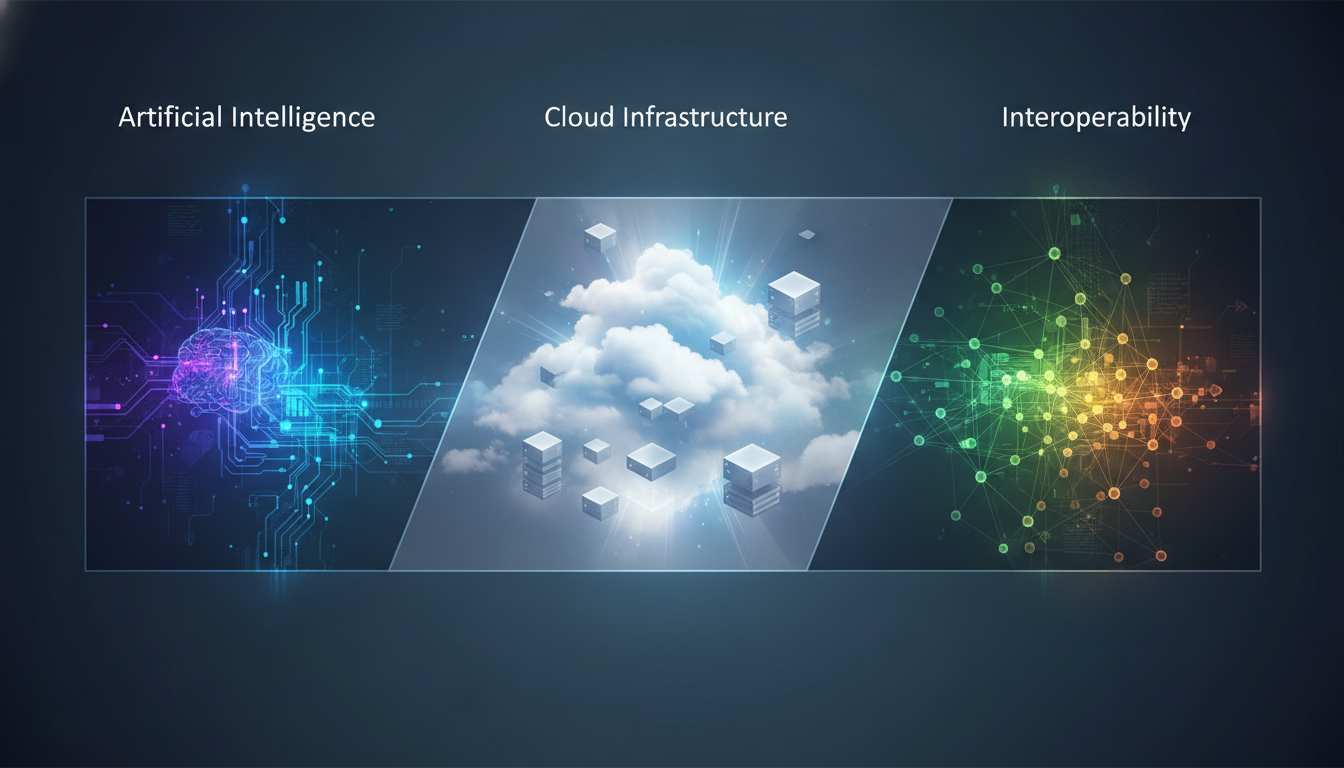
The landscape of global healthcare IT is continuously evolving, driven by several overarching trends. Artificial Intelligence (AI) is rapidly moving from theoretical concept to practical application, as seen in Epic's Health Alerts and AI Charting tools, and Oracle Health's 'AI-first' next-generation EHR. These advancements promise to enhance decision support, automate routine tasks, and improve overall operational efficiency. Interoperability remains a critical focus, with initiatives like TEFCA and MEDITECH's Traverse Exchange striving to create more connected and accessible patient health records across disparate systems. The shift towards cloud-based infrastructure is also accelerating, exemplified by Oracle Health leveraging Oracle Cloud Infrastructure and MEDITECH's 'as a Service' model, offering scalability, security, and flexibility to healthcare providers. These trends collectively underscore a move towards more intelligent, integrated, and user-friendly healthcare technology.
Conclusion
The contributions of companies like Epic Systems, Oracle Health, Veradigm, and MEDITECH are indispensable to the ongoing digital transformation of healthcare. Their continuous innovation in EMR, AI, cloud solutions, and interoperability is not only shaping the operational capabilities of healthcare organizations but also influencing the future direction of global health information management. As the industry progresses, these leading solution providers will remain at the forefront, driving advancements that support more efficient and connected care delivery worldwide.